
 EN


In today's digital landscape, the demand for faster and more reliable data transmission continues to grow exponentially. Organizations worldwide rely on robust infrastructure to support their connectivity needs, and optical fiber cable has emerged as the foundational technology enabling this transformation. An optical fiber cable represents a quantum leap in how data travels across networks, offering unprecedented speed, reliability, and capacity compared to traditional copper-based systems. Understanding how optical fiber cable supports high-speed data transmission is essential for anyone involved in telecommunications, data center operations, or network infrastructure planning.
The superior performance of optical fiber cable stems from its fundamental design and the physics of light propagation. Rather than relying on electrical signals that degrade over distance, an optical fiber cable transmits data using pulses of light through glass or plastic strands. This shift from electrical to optical transmission eliminates many limitations that constrain copper cables, enabling organizations to achieve data rates that were once considered impossible. Whether deployed in enterprise networks, data centers, or long-distance telecommunications infrastructure, optical fiber cable continues to redefine what high-speed data transmission can accomplish.
The Physics Behind Optical Fiber Cable Performance
Light Propagation and Signal Integrity
The fundamental advantage of optical fiber cable lies in its use of light to carry information. Light travels through the glass core of an optical fiber cable at approximately 200,000 kilometers per second, nearly two-thirds the speed of light in a vacuum. This speed remains essentially constant regardless of distance, whereas electrical signals in copper cables experience attenuation and degradation as they travel farther. An optical fiber cable maintains signal integrity over much greater distances without the need for frequent signal regeneration, making it ideal for both short-reach data center applications and long-distance telecommunications routes.
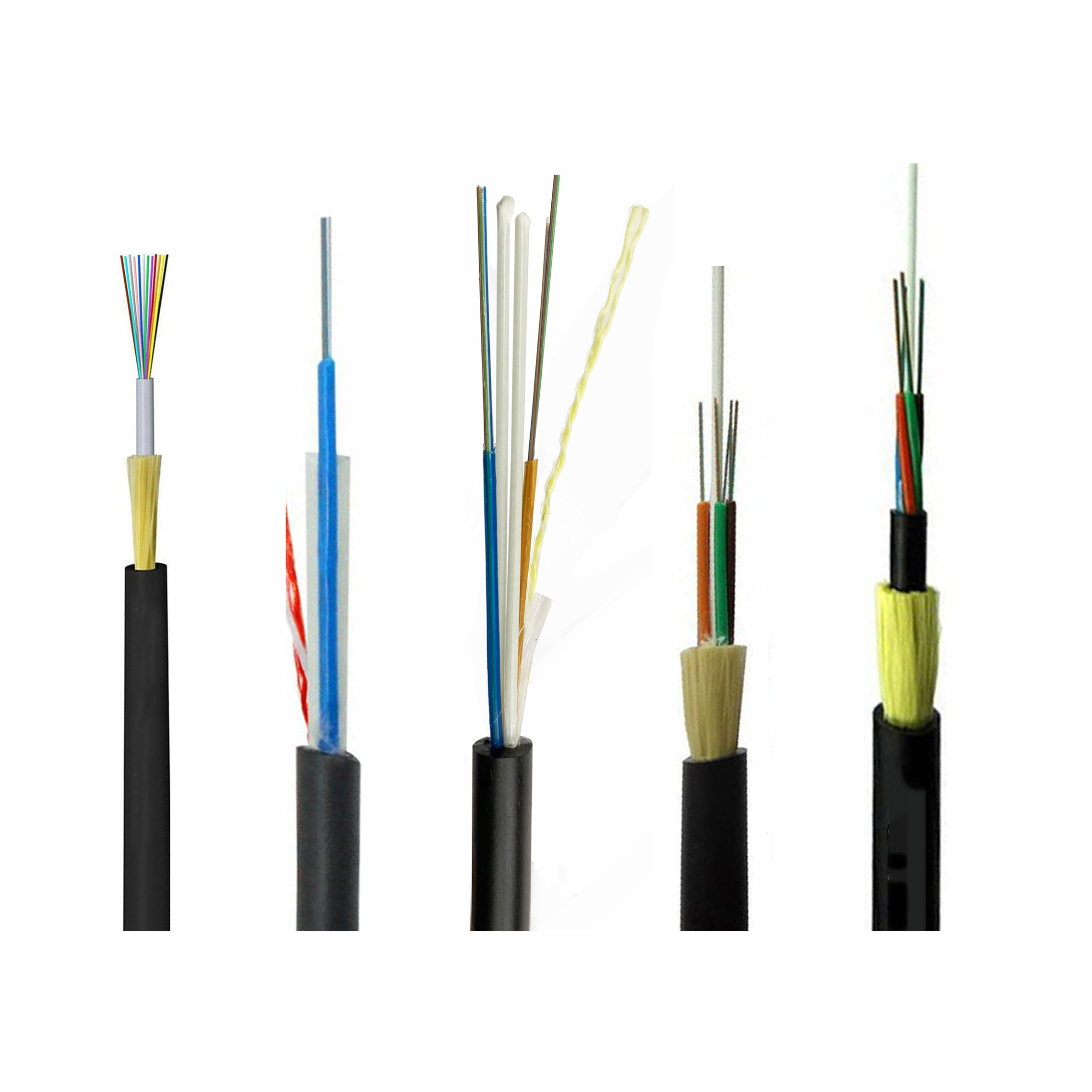
The structure of an optical fiber cable includes a core, cladding, and protective jacket, each serving a critical function. The core, typically 8 to 50 micrometers in diameter depending on fiber type, contains the glass material through which light propagates. The cladding surrounds the core and has a lower refractive index, which causes light to reflect back into the core through total internal reflection. This design principle ensures that an optical fiber cable can guide light signals over tremendous distances with minimal loss, a capability that copper conductors simply cannot replicate at these speeds and distances.
Wavelength Division Multiplexing Capabilities
One of the most powerful features enabling optical fiber cable to support high-speed data transmission is wavelength division multiplexing, or WDM. This technology allows a single optical fiber cable to carry multiple data streams simultaneously by assigning each stream a different wavelength or color of light. Dense wavelength division multiplexing, known as DWDM, can pack dozens or even hundreds of separate channels into a single optical fiber cable, exponentially increasing transmission capacity without laying additional physical infrastructure. This efficiency makes optical fiber cable the most cost-effective solution for handling massive bandwidth demands in modern networks.
The ability to multiplex signals within an optical fiber cable directly translates to higher aggregate throughput for data center interconnects and telecommunications networks. By utilizing different wavelengths, carriers and enterprises can maximize their return on investment in fiber infrastructure. An optical fiber cable deployed today can support higher data rates tomorrow through equipment upgrades alone, without requiring costly physical recabling. This future-proofing aspect makes optical fiber cable a strategic choice for organizations planning long-term network expansion.
Advantages of Optical Fiber Cable for Data Centers and Networks
Bandwidth and Speed Capabilities
Data centers represent one of the most demanding environments for network infrastructure, and optical fiber cable has become the standard choice for interconnecting servers, storage systems, and switches. Modern optical fiber cable systems support data rates of 400 gigabits per second and beyond, with research prototypes demonstrating even higher speeds. The bandwidth capacity of optical fiber cable far exceeds what copper cables can deliver, even over short distances within a data center. A single optical fiber cable strand can transmit terabits of data per second when properly equipped with compatible optics and switching infrastructure.
The speed advantages of optical fiber cable extend beyond raw throughput to include latency characteristics crucial for time-sensitive applications. Applications requiring synchronization, financial transactions, or real-time analytics depend on the low and predictable latency that optical fiber cable provides. Unlike copper alternatives that experience variable delays, an optical fiber cable delivers consistent performance, making it the preferred technology for mission-critical network operations where every millisecond matters.
Distance and Reliability Strengths
Optical fiber cable can transmit data effectively over distances ranging from under a meter in data center environments to over 100 kilometers without intermediate amplification or regeneration. This extended reach fundamentally changes network design possibilities, allowing operators to consolidate facilities, extend metropolitan area networks, or establish resilient backup routes. The reliability of optical fiber cable also exceeds copper alternatives, as the medium is inherently immune to electromagnetic interference, radio frequency noise, and electrical surges that plague copper installations.
The immunity to electromagnetic interference possessed by optical fiber cable proves invaluable in challenging industrial environments, electrical substations, and facilities with heavy machinery. Where copper cabling would require expensive shielding and careful routing to maintain signal quality, an optical fiber cable operates flawlessly without such constraints. This characteristic reduces installation complexity and total cost of ownership while simultaneously improving system reliability. Organizations deploying optical fiber cable infrastructure gain a competitive advantage through superior uptime and reduced maintenance requirements compared to traditional copper systems.
Practical Implementation and Future Outlook
Deployment Considerations for Optical Fiber Cable
Implementing optical fiber cable infrastructure requires understanding the distinctions between single-mode and multimode fiber types. Single-mode optical fiber cable features a tiny core diameter that supports only one light path, enabling longer distances and higher speeds, making it essential for carrier-grade telecommunications and long-distance data center interconnects. Multimode optical fiber cable accommodates multiple light paths simultaneously, which simplifies connections but limits distance to typically several hundred meters, making it ideal for in-building and data center backbone applications where high-speed data transmission within moderate distances is required.
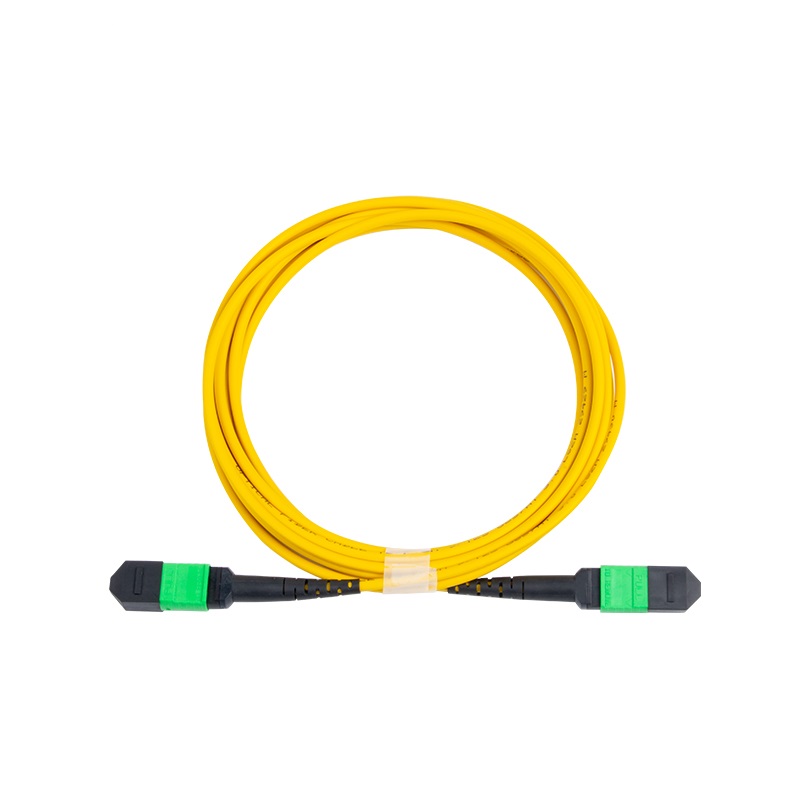
The connector types and interface standards used with optical fiber cable have standardized over time, improving interoperability and reducing costs. From basic LC and SC connectors to advanced MTP and MPO connectors for high-density applications, the optical fiber cable ecosystem now offers solutions for virtually every network architecture. Organizations must carefully evaluate their specific requirements for speed, distance, and scalability when selecting among the various optical fiber cable options available in the market.
Emerging Trends in Optical Fiber Cable Technology
The telecommunications industry continues advancing optical fiber cable capabilities through innovations in laser technology, photodetectors, and signal processing electronics. Next-generation optical fiber cable systems are pushing toward terabit-per-second transmission rates, requiring even more sophisticated modulation schemes and specialized fiber designs. These developments promise to sustain the exponential growth in data transmission capacity that has defined the internet era, ensuring that optical fiber cable remains the technology of choice for decades to come.
Sustainability considerations are also influencing optical fiber cable development, with manufacturers focusing on reducing energy consumption in optical transmission systems and improving the recyclability of fiber materials. As organizations worldwide commit to reducing their carbon footprint, the inherent energy efficiency of optical fiber cable compared to electrical transmission alternatives becomes increasingly attractive. This convergence of technical performance and environmental responsibility positions optical fiber cable as a cornerstone technology for building sustainable, future-proof network infrastructure.
FAQ
Why is optical fiber cable faster than copper cabling?
Optical fiber cable transmits data as light pulses that travel near the speed of light with minimal signal degradation over distance. Copper cables transmit electrical signals that weaken and slow down as they travel, requiring regeneration equipment at intervals. The fundamental physics of light propagation makes optical fiber cable inherently faster and more efficient for high-speed data transmission, especially over longer distances or higher data rates.
Can optical fiber cable be used in short-distance data center applications?
Yes, optical fiber cable is increasingly used within data centers despite the availability of shorter-distance technologies. Modern data center designs employ optical fiber cable for its superior bandwidth capacity, future scalability, and immunity from electromagnetic interference. High-density connector systems like MTP and MPO make optical fiber cable practical for short-reach applications, and the cost of related equipment has declined significantly, making it competitive even for shorter interconnects.
What determines the maximum transmission distance for optical fiber cable?
The maximum transmission distance for optical fiber cable depends on multiple factors including the fiber type (single-mode versus multimode), the wavelength of light used, the bit rate, and the acceptable signal degradation. Single-mode optical fiber cable can transmit hundreds of kilometers without regeneration, while multimode is typically limited to a few hundred meters. Modern amplification and signal regeneration technologies extend these distances further, and specialized optical fiber cable designs continue to push practical limits higher.