
 EN


Long-distance connectivity has become the backbone of modern communication infrastructure, and optical fiber cable stands at the forefront of this technological revolution. Organizations worldwide rely on robust connectivity solutions to transmit data across cities, regions, and continents, and optical fiber cable delivers the speed, reliability, and bandwidth capacity that traditional copper-based systems simply cannot match. Understanding how optical fiber cable works and why it has become the industry standard for long-distance communication is essential for businesses planning infrastructure investments.
The fundamental advantage of optical fiber cable lies in its ability to transmit data using light pulses instead of electrical signals. This shift from electrical to optical transmission eliminates the electromagnetic interference that plagues copper networks and allows optical fiber cable to maintain signal integrity over significantly longer distances without requiring signal amplification at frequent intervals. Whether connecting data centers, supporting telecommunications infrastructure, or enabling internet backbone networks, optical fiber cable provides the foundation for seamless, high-speed communication across vast geographical areas.
Light-Based Transmission and Signal Integrity
How Optical Fiber Cable Transmits Data Over Distance
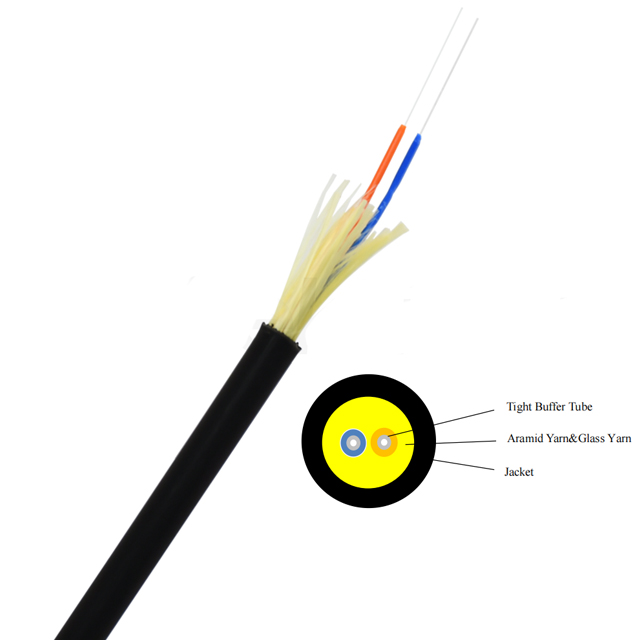
At its core, optical fiber cable operates on a simple yet powerful principle: converting electrical data into light signals, transmitting those signals through glass or plastic cores, and converting them back to electrical signals at the receiving end. The optical fiber cable is engineered with multiple layers, including a core where light travels, a cladding layer that reflects light back into the core, and protective outer layers that shield the fiber from environmental damage. When data enters an optical fiber cable, a laser or light-emitting diode modulates the light beam according to the data pattern, allowing millions of individual light pulses to travel simultaneously through a single strand of optical fiber cable.
The wavelength of light used in optical fiber cable communication typically ranges from 850 nanometers in short-distance applications to 1550 nanometers in long-distance systems. This choice of wavelength is crucial because optical fiber cable exhibits minimal attenuation at these specific wavelengths, meaning light signals retain their strength over exceptionally long distances. For instance, a single optical fiber cable strand can transmit data across 100 kilometers or more without significant signal degradation, whereas copper cables require signal repeaters every few hundred meters. This inherent advantage of optical fiber cable makes it economically superior and technically more reliable for long-distance infrastructure projects.
Signal Purity and Minimal Interference
One of the most compelling reasons why optical fiber cable dominates long-distance connectivity is its complete immunity to electromagnetic interference. Copper cables are vulnerable to interference from power lines, radio transmitters, and other electronic equipment, which can corrupt data and necessitate expensive shielding solutions. In contrast, optical fiber cable uses light as its transmission medium, meaning external electromagnetic fields have absolutely no impact on signal quality. This characteristic of optical fiber cable is particularly valuable in industrial environments, near power infrastructure, and in densely populated urban areas where electromagnetic noise is unavoidable.
Additionally, optical fiber cable exhibits virtually zero crosstalk between adjacent fibers when multiple fibers are bundled together in a single cable. This allows telecommunications companies and data center operators to pack dozens or even hundreds of fiber strands into a single optical fiber cable without worrying about signal contamination between channels. The purity and isolation that optical fiber cable provides enable network operators to maximize bandwidth utilization while maintaining pristine signal quality across every connection, a feat that copper-based alternatives cannot reliably achieve at comparable distances.
Bandwidth Capacity and Speed Advantages
Unprecedented Data Transmission Rates
Modern optical fiber cable technology supports transmission rates of 100 gigabits per second and beyond, with laboratory demonstrations achieving terabit-per-second speeds over long distances. This extraordinary capacity emerges because optical fiber cable can encode information using multiple wavelengths simultaneously through a technique called wavelength-division multiplexing (WDM). By assigning different colors of light to different data streams, an optical fiber cable can carry multiple independent communication channels through the same physical strand simultaneously. This multiplexing capability of optical fiber cable is impossible with copper cables and represents one of the most significant technological advantages that justifies the transition to fiber-based infrastructure.
For organizations transmitting massive volumes of data across long distances, optical fiber cable is not merely an incremental improvement over copper alternatives but a fundamental technological leap. Cloud service providers, financial institutions, and media companies depend on optical fiber cable to move terabytes of data daily between geographically distributed facilities. A single optical fiber cable connection can handle the simultaneous voice, video, and data requirements of millions of users, making it the only practical solution for backbone networks supporting modern internet traffic and enterprise communications.
Future-Proofing Network Infrastructure
When organizations invest in optical fiber cable infrastructure, they are making a future-proof decision that will remain relevant for decades. The bandwidth capacity of optical fiber cable can be increased substantially by deploying new transponders and multiplexing techniques without physically replacing the cable itself. Copper-based networks, by contrast, hit hard bandwidth limitations that require complete infrastructure replacement when capacity demands increase. This scalability of optical fiber cable makes it economically advantageous for long-distance connectivity projects, as the initial capital investment protects against future obsolescence and reduces total cost of ownership over the infrastructure lifecycle.
Reliability and Cost Efficiency Over Long Distances
Durability and Low Maintenance Requirements
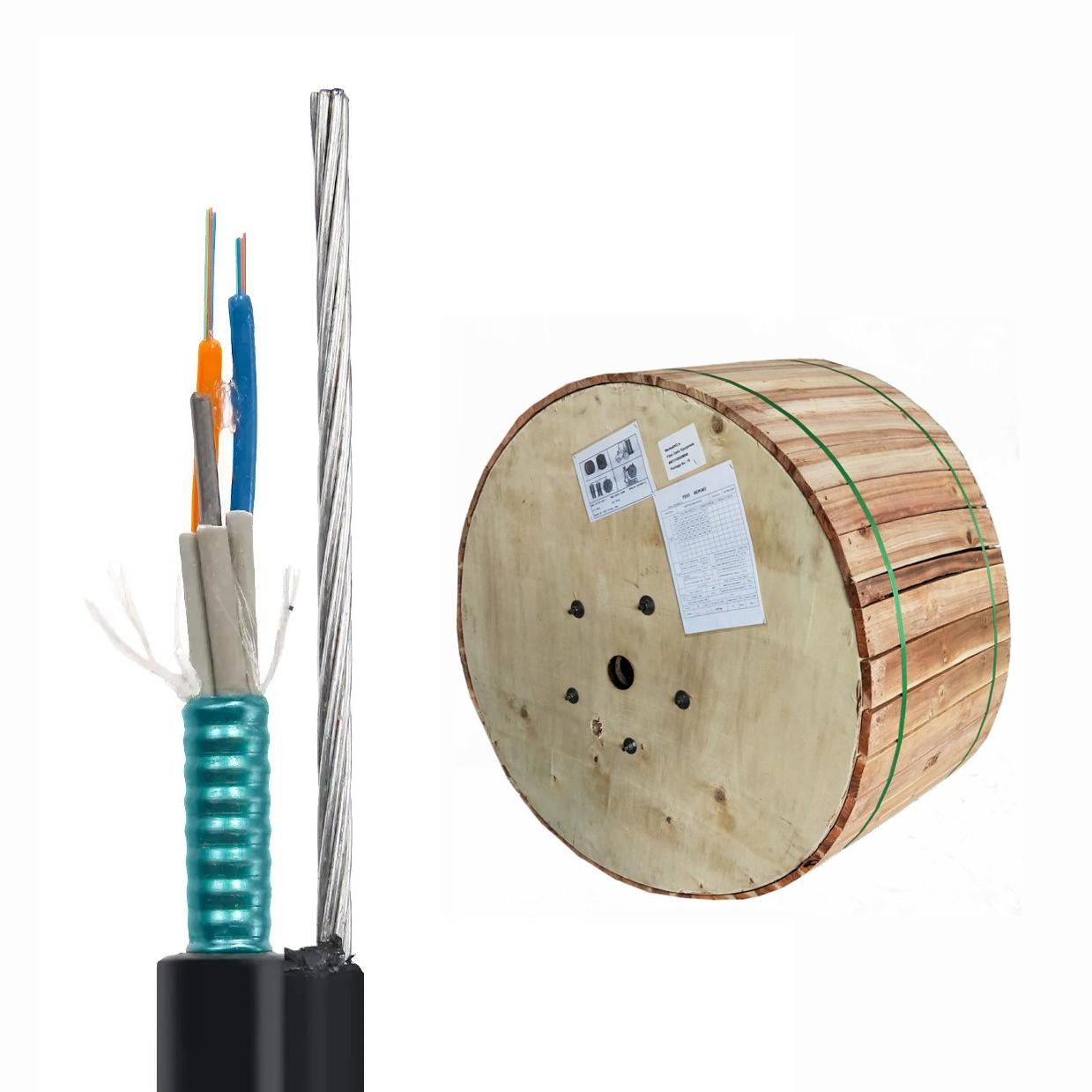
Optical fiber cable is inherently more durable than copper for long-distance applications because it is not subject to corrosion, chemical degradation, or the brittleness that affects metallic conductors over time. The glass or plastic core of optical fiber cable does not oxidize, corrode, or weaken when exposed to moisture, temperature fluctuations, or harsh environmental conditions. Modern optical fiber cable is also designed with robust protective jackets that shield the inner fibers from physical damage during installation and throughout the service life of the cable. This durability advantage translates directly into lower maintenance costs and fewer service interruptions for long-distance networks.
The mean time between failures (MTBF) for well-installed optical fiber cable infrastructure is measured in decades, far exceeding the service expectations of copper networks. Network operators who deploy optical fiber cable for long-distance connectivity experience significantly fewer signal outages, emergency repairs, and infrastructure replacements compared to those relying on copper alternatives. When combined with the absence of electromagnetic interference and the superior signal integrity that optical fiber cable provides, the total cost of ownership becomes substantially lower than what copper-based systems require.
Reduced Power Consumption and Operating Expenses
Long-distance copper networks require signal repeaters and amplifiers at regular intervals to maintain signal strength, and each of these devices consumes substantial electrical power. In contrast, optical fiber cable can achieve much longer transmission distances with passive amplification, meaning fewer active electronic components are needed along the transmission path. This reduction in powered equipment translates into significant savings in electrical consumption, cooling requirements, and facility maintenance. For telecommunications providers and data center operators managing long-distance optical fiber cable networks, the energy cost savings alone often justify the initial investment in fiber infrastructure.
Furthermore, optical fiber cable systems require less frequent upgrades to maintain performance standards compared to copper alternatives. The bandwidth scaling capabilities of optical fiber cable mean that capacity improvements can often be achieved through equipment updates rather than physical cable replacement. This flexibility makes long-distance optical fiber cable infrastructure more economical over its full lifecycle, even when accounting for the higher initial installation costs that fiber systems sometimes entail.
FAQ
What distances can optical fiber cable realistically support without signal degradation?
Standard single-mode optical fiber cable can transmit signals reliably over distances exceeding 100 kilometers without requiring signal amplification, and with optical amplifiers strategically placed, distances of 500 kilometers or more become feasible. This far exceeds what copper networks can achieve, making optical fiber cable the only practical choice for true long-distance connectivity. For submarine and intercontinental applications, optical fiber cable infrastructure spans thousands of kilometers with amplifier stations positioned at regular intervals.
How does optical fiber cable handle moisture and outdoor environmental exposure?
Modern optical fiber cable products are engineered with multiple protective layers specifically designed to withstand outdoor conditions, including moisture, temperature extremes, and UV exposure. The outer jacket of optical fiber cable is typically made from polyethylene or other weather-resistant materials, and the fiber itself, being composed of glass, is impervious to moisture and corrosion. Underground and aerial optical fiber cable installations have proven their durability over decades in harsh environmental conditions worldwide.
Is optical fiber cable installation more complex than traditional copper cabling?
While optical fiber cable installation requires specialized tools and trained technicians, modern installation techniques and improved cable designs have made the process increasingly straightforward. Professional optical fiber cable installation services are widely available, and the one-time complexity of deployment is quickly offset by the decades of superior performance, lower maintenance, and higher reliability that optical fiber cable provides compared to copper alternatives.